
Several years ago, I began writing a book on praying he words of Scripture. It’s especially for those who wonder what to pray. What do I pray when life comes crashing in? What do I pray when cheated by an enemy? How do I face a challenge I don’t want to go through? I also want the book to help those who don’t have a problem with what to pray, but could use osme extra content to get past praying the same things over and over and over again (like me). As I worked on the book, I started leanring about publishing books in the current culture. One thing I leanred is that to get a publisher to take someone’s book proposal seriously, they had to have well over a thousand names on their mailing list.
I started a website and a blog. On that website is a box to use ot subscribe to my mailing list. In exchange, those who sig up would get a shoart devotional piece I wrote on facing crisis and catastrophe using the book of Habakkuk, one fo the Minor Prophets in the Old Testament. I hoped this work would be of help to other believers. I found Habakkuk’s psalm in Habakkuk 3 helpful in my own prayers.
Apparently, I was wrong. I have had very few people sign up on my mailing list, and few people subscribe to my blog. I rarely have anyone comment on my blog posts. I once sent out a llink ofr a survey to help me learn what would be helpful to potential readers, but no one did the survey.
So, I can only assume that I’m missing the mark badly. There are multiple possible reasons for this, but basically, I am getting ready to give up on bulidng my blog on my website. I am working on building a new Substack, but I haven’t finished setting that up yet. I am hoping that more people will find my blog and sign up on my mailing ilst. I have a long way to go to 1000. I was hoping that word of mouth would cause this blog to gain more followers or subscribers. Without a lot of people interested in what I write, there would be no point in even self-publishing my book. I’ll let you know when I’m switching.
Book review of How Not to Read the Bible Making Sense of the Anti-women, Anti-science, Pro-violence, Pro-slavery and Other Crazy-Sounding Parts of Scripture by Dan Kimball. Grand Rapids, MI: Zondervan Reflective, 2020.
This is an excellent book. The author points out many deliberate misreadings of the Bible, including many memes. Those make the book more entertaining, even though the book is serious. The author seeks to accomplish a lot.
There are eighteen chapters, divided into six parts. One of the important refrains throughout the book is, “Never read a Bible verse.” Kimball’s point with this startling statement is to avoid reading verses out of context. I’ve quoted this from Ben Witherington, III before: “A text out of context is a pretext for whatever you want it to mean.” That is, if you ignore the context, you can make a verse mean whatever you want it to.
One of the things the book does, though the author doesn’t talk about this, is the danger, shown by many memes, of reading a piece of the Bible without any knowledge of the world from which the passage came and no effort to research to learn more. Therefore, all kinds of stupid stuff are put forward by unbelievers.
The book begins with a prelude, “How to Become an atheist by reading the Bible.” This is a warning about misreading the Bible. Part 1 is,” Never Read a Bible Verse (or you will have to believe in Magical Unicorns).” The first chapter deals with unicorns in the Bible. The King James translators, following an earlier English translation, came to a word that means a one-horned animal. They rendered it by “unicorn.” That’s not what the word referred to in its original context. The chapter warns against translation problems like this. You would need to read a modern translation or two to see how this word ought to be translated. However, Kimball’s point is that many have mocked the Bible because it talks about unicorns. This is one reason that reading a modern translation is important. Better knowledge about Hebrew and Greek and the world in which the Bible was written yields better translations.
Kimball states that there are “puzzling and disturbing verses in the Bible but there are explanations!” This is a theme in the book. The author talks about violence in the Bible, slavery, misogyny, and other hot topics. He offers insights and explanations for each one. For example, he talks about the reality of slavery in the world of the New Testament. There, every third or fourth person was a slave. However, it’s important to know that slavery in that world was not like slavery in the southern part of the United States in the 18th-19th centuries. One might become a slave by being captured in a war. One might also become a slave by choice in order to avoid homelessness and starvation. People also became slaves to pay off debts. If one owed money to someone, the debtor could become a temporary slave to work off the debt.
Kimball also notes that early church leaders did not want slavery, but did not see a way around it. You couldn’t go to Rome and protest against slavery in front of the Imperial palace. The New Testament authors did not approve of slavey. They offered slaves and masters advice on living with this reality. That’s not approval. In fact, in Philemon, Paul argues this slave owner to release Onesimus from slavery.
In the book of Exodus, references to slavery should be understood as indentured servants. They became servants to pay off debts and unlike slave holders in the southern U.S., there were rules about hurting or killing slaves to prevent a master from abusing their slaves. Again, the issue is that Christians and non-Christians alike read such verses without understanding the cultural and social realities of the world that these troubling verses come from.
Kimball talks about verses that appear to oppress women. These verses are much debated, and Kimball offers some helpful insights. The texts are complicated and one would need to read other books for more insights, but the author shows that the Bible is not anti-woman. Kimball doesn’t point this out, but it is worth noting that God made man and woman both in his image. He gave a woman, an ezer, to the man. The word ezer, often translated helper, is used in the Bible almost exclusively for God. So, when Genesis refers to the woman as an ezer, it is not referring to her as a lowly servant, unless you want to think of God that way. I would hope that you don’t. Given its use for God, you could think of Eve as closer to Xena, Warrior Princess, than an inferior. Those who read Genesis 1-2 and see Eve as a subordinate are ignoring this and reading their own desire for females as inferior into the text, e.g., John Piper. We should never do this.
The book begins with what to do when we come across some crazy Bible passages. It goes on to talk about violence in the Old Testament, science and the Bible, slavery, women and the Bible, and more. Chapter 1 discusses the apparent presence of unicorns in the Bible.
There are things that the author leaves out, but he does a very good job of enabling Christians to trust the Bible and providing good answers to the skepticism of unbelievers. I highly recommend this book.
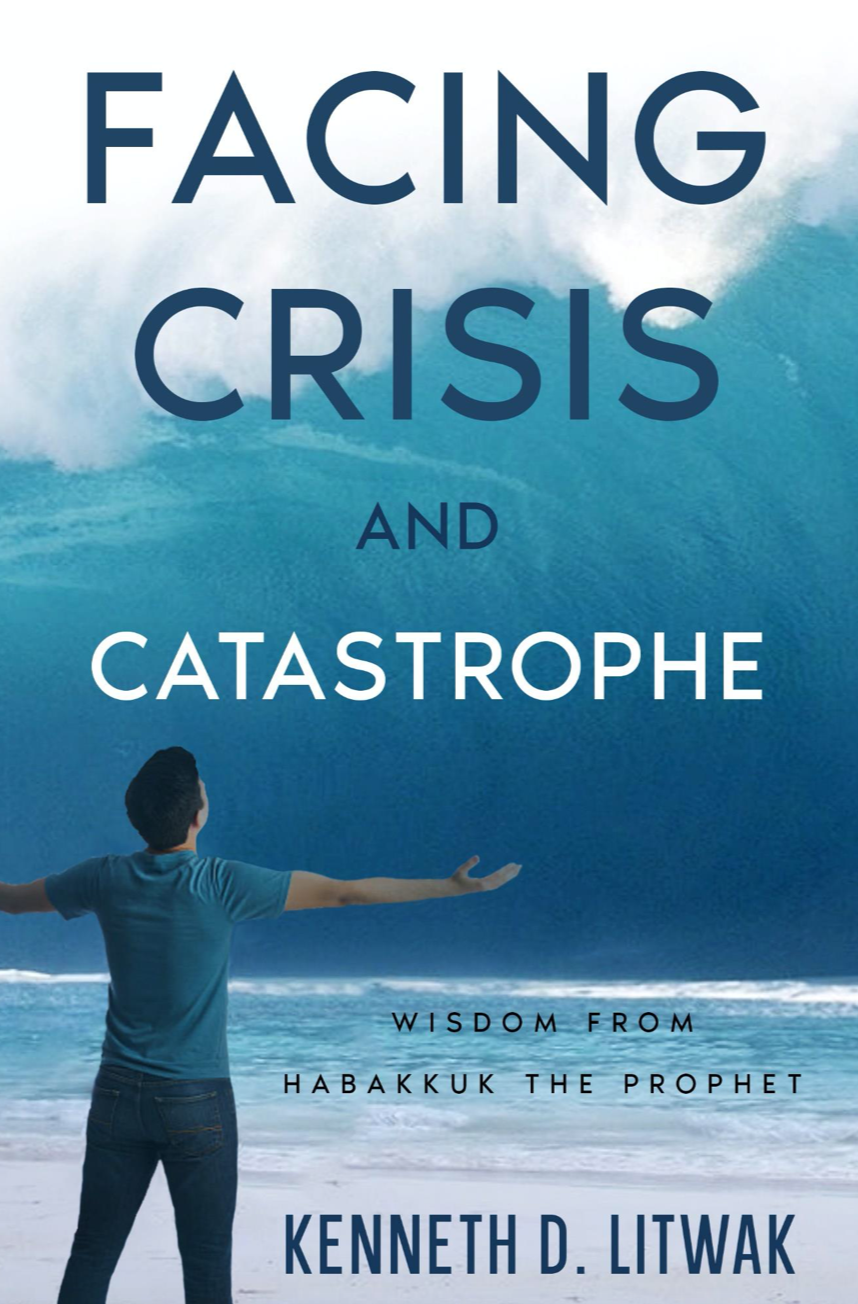
Please share this post with others.You can sign up for my mailing list and get the download, Faciing Crisis and Catastrophe when you do so. Thanks for reading.

I haven’t read the book but enjoyed your review.
My own pet peeve is the statement, “I take the Bible literally.” This is an obvious oxymoron: you can’t take anything literally if it’s not in the original alphabet of its original language! My point, which I imagine you’ll agree with, is that the entire library which is the Bible was written over many centuries, and naturally customs and meanings of words changed dramatically over those centuries, and much more so in the last nearly two millenia. Biblical historians, working with translators of ancient languages, make well-educated guesses about meaning in the early contexts. This is admirable and painstaking work, and we need it.
I always ask myself, ‘What is the spiritual meaning the author of each book felt and meant to convey?’ How can I apply it to my life?
Is there deeper symbolism instead of, or in addition to, the words as they’ve been translated by the best scholars? Does “Thou shalt not boil a kid in its mother’s milk” mean not to eat, e.g. a cheeseburger, and/or does it point to the contradiction between the life-giving qualities of milk vs. the slaughter of the young animal? And is that a reminder to be aware at each meal that our lives depend on the death of another lifeform? I don’t care if it’s a mushroom; we have to kill it to eat it. So what may appear to be a hidebound, ancient command can lead to a reflection on how God’s creation is interdependent.
If Jesus says, “I come not to bring peace, but a sword, does he mean that the people of Judea should rise and overthrow their Roman occupiers? No, he got himself killed for saying such things, but those who understood his meaning knew that he wanted his followers to separate stale traditions
from a real, lived connection to God, with the force of a symbolic sword. The Jewish elders of the time, and their Roman occupiers, felt threatened by his message. And well they should have been! We should ALL feel challenged by that message, not physically as his enemies felt, but spiritually. He asked us to live our faith, like the “Good Samaritan,” not just go through the motions.
(And speaking of Samaritans, his inclusion of them, and his treatment of women, were also radical and challenging for his time.)
I’m always open to new research on ancient scriptures. As I’ve mentioned in our previous conversations, I also welcome study of the scriptures that the Catholic church fathers rejected, and why. I see no reason why non-Catholic Christians should reject sayings of Christ that didn’t further the Catholic Church’s agenda.